

ロゴデザインby たかくらかずき
ハイパーミュージアム 飯能


EMI KUSANO
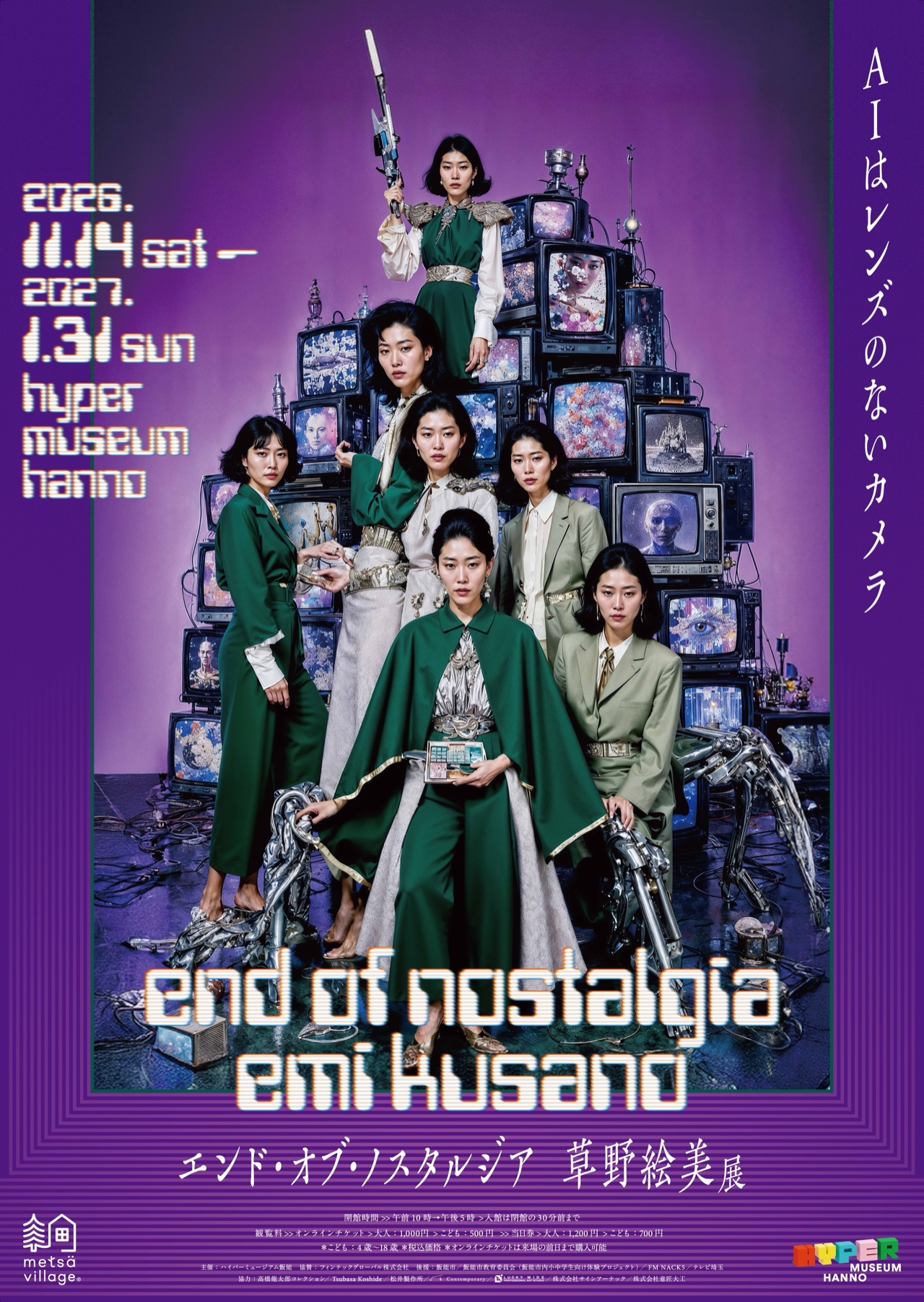
END OF NOSTALGIA草野絵美展「エンド・オブ・ノスタルジア」
AIはレンズのないカメラ
2026.11.14 sat - 2027.1.31 sun
開館時間 | 10:00 - 17:00 (入館は閉館の30分前まで)
休館日 | 2027年1月12日(火)〜14日(木)
主催 | ハイパーミュージアム飯能
協賛 | フィンテック グローバル株式会社
後援 | 飯能市、飯能市教育委員会(飯能市内小中学生向け体験プロジェクト)、FM NACK5、テレビ埼玉
協力 | 高橋龍太郎コレクション、Tsubasa Koshide、松井製作所、√K Contemporary、株式会社ラッキーワイド、株式会社サインアーテック、株式会社意匠大工
ハイパーミュージアム飯能は、世界的に高い評価を得るとともに、生成AIアートの国際的なシーンを牽引するアーティスト、草野絵美の大規模な美術館個展を開催いたします。
1990年に東京に生まれた草野は、自分が生まれる前の時代も含む「ありえたかもしれない過去・記憶」を、AIと協働して作品化してきました。竹の子族、ギャル、デコラ、ゴシック・ロリータなど、時代を横断する日本のストリートカルチャーを手がかりに、イメージの生成・選択・編集を重ねています。
本展は、LEDによる動画作品に始まり、続いて壁面には、自身の顔や身体を学習させたAIモデルを用いて、自らの分身にさまざまな社会的役割や人物像を演じさせたプリント作品《Ornament Survival》シリーズが並びます。これは、アートバーゼルなど、世界のアートシーンで絶賛される作品で、25点が展示されます。新作のプリント作品《Ornament Survival: Future Remains》も並びます。
また展示室に入ると、新作のTVモニターを積み上げた巨大なインスタレーション《Memory Metabolism》には、異なる時代を思わせる映像が同時に明滅し流れ、草野のこれまでのAI作品と、どこかで放送されていたかのような架空の番組の場面が混じります。イメージは見る人間がいてもいなくても生産され続けるだけ。TVに蓄えられてきた人類の記憶はもはや危機にさらされています。
タワーの脇の床には、最新作スカルプチャーの《Mementoid》が置かれています。人工生命体が、人類の残したコンパクトを開き、鏡を覗き込んでいる、その一瞬がそのまま形になった彫刻です。この存在は、鏡の中に何を見ているのでしょう?
そして、一番奥の背景にも二重のスクリーンにも《Memory Metabolism》が投影されています。かつてTVが描いた未来と、それを見ていた暮らしの名残。色も質感も懐かしいのに、時代の辻褄が合わない。それが本当にあった過去なのかは、映像のどこにも示されていないのです。
草野絵美は、世界や自身の忠実な再現よりも「違和感」や「居心地の悪さ」を重視します。自身の文化や経験をAIの表現に持ち込むことを、「同質化していく世界に対する、アーティストとしての私のささやかな抵抗であり、遊び」と捉えています。
草野が見つめるのは、情報や関心が細分化されていくネット社会です。かつて多くの人々が共有していた物語や、時代の「記憶」は、これからどう変わっていくのでしょうか。ノスタルジアを喚起する基盤の揺らぎの中で、草野は「ありえたかもしれない記憶」を未来に向けて生成します。
AI Is a Camera Without a Lens
HYPER MUSEUM HANNO is pleased to present a major solo museum exhibition by Emi Kusano, an internationally acclaimed artist and a leading figure in the global generative AI art scene.
Born in Tokyo in 1990, Kusano works with AI to give form to “pasts and memories that might have been,” including those from eras before her birth. Drawing on Japanese street cultures across different periods—including Takenoko-zoku, gyaru, decora, and Gothic Lolita—she develops her works through a process of generating, selecting, and editing images.
The exhibition begins with an LED video work, followed by a series of prints from Ornament Survival displayed along the walls. In this series, Kusano uses AI models trained on images of her own face and body to create doubles of herself that perform socially constructed roles and embody familiar cultural archetypes. Acclaimed at Art Basel and across the international art scene, the series is represented here by 25 prints. The exhibition also features new works from the series Ornament Survival: Future Remains.
Upon entering the exhibition gallery, visitors encounter Memory Metabolism, a monumental new installation built from stacked TV monitors. Images evoking different eras flicker and play simultaneously, interweaving Kusano’s previous AI-generated works with scenes from fictional television programs that seem as though they might once have aired somewhere. Images simply keep being produced, whether or not anyone is there to see them. The collective memories of humanity, accumulated through television, are now under threat.
On the floor beside the tower stands Mementoid, Kusano’s latest sculptural work. The sculpture captures a single moment in which an artificial life form opens a compact left behind by humanity and peers into its mirror. What does this being see in the mirror?
Memory Metabolism is also projected onto the backdrop at the far end of the gallery and onto two overlapping screens. Visions of the future once portrayed on television mingle with traces of the lives of those who watched them. The colors and textures evoke nostalgia, yet the details of the eras do not quite add up. Nowhere in the footage is there any indication of whether these images depict a past that truly existed.
For Emi Kusano, incongruity and discomfort take priority over faithful reproduction of the world or herself. Kusano describes bringing her own cultural experiences into AI-generated imagery as “my small act of resistance as an artist against an increasingly homogenized world, and a form of play.”
Kusano turns her attention to an online society in which information and interests are increasingly fragmented. How will the stories and memories of an era that once connected so many people change in the years ahead? As the foundations of nostalgia shift, Kusano generates “memories that might have been” and projects them toward the future.
この展覧会の展示作品は、購入することが出来ます。スタッフまでお問い合わせ下さい。
The artworks in this exhibition are available for purchase. Please ask a staff member for details.
TICKET
※当日チケットは、ミュージアムチケットブースにて販売 (販売時間 10:00 - 16:30)